

Sorting, Scanning, and Learning-
Photo Archive Acquisition Project Underway at the Merced Courthouse Museum

Piles of photographs acquired by the Merced County Courthouse Museum from the Merced Sun Star newspaper. Photo: Steve Newvine
Tom Gaffrey is on a mission to preserve history.
Tom, who retired from the Merced County Public Works department several years ago, spends a good part of his free time as a docent at the County Historical Society.
His current project is sorting through thousands of photographs acquired from the Merced Sun Star.

Merced County Courthouse Museum docent Tom Gaffrey works on the multi-year project to categorize, digitize, and electronically store more than ten thousand pictures acquired from the Merced Sun-Star. Photo: Steve Newvine
When the paper sold their former G street building and moved to a much smaller office location, a lot of things had to go.
There was simply no space to store boxes and boxes of hard copy photographs.
“We’ve acquired items from the Sun Star in the past,” says Museum Executive Director Sarah Lim. “This was another opportunity for the Museum to preserve local history.”
The photographs arrived with very little information about the subjects depicted.
“We’d get a batch with the year written on the box or envelope.” Tom said.

Bound volumes of Merced Sun Star newspapers, are stored at the Merced County Courthouse Museum. The books are being used now to provide more information about the photographs acquired by the Museum. Photo: Steve Newvine
According to Sarah Lim, museum volunteers went to the Sun-Star office and picked up an estimated ten-thousand photographs.
“They were in envelopes, folders, and boxes,” Sarah said.
The process is extensive with historical archiving protocols to preserve and protect the photographs.
“The first two steps (cleaning and organizing) were completed last year,” Sarah said. “Now, we are in the next major step of researching and accessioning hundreds and thousands of photos and negatives.”
Accessioning refers to the recording of the addition of a new item to the museum collection.
The photos cover a span from the late 1960s to the 1990s.

One of over ten-thousand photographs acquired by the Merced County Courthouse Museum. This photo is from December 1976.
As a volunteer, Tom adheres to a process set up to handle the photographs.
“We take a batch, sort them out by month, and then examine each photo. In most cases, we examine the actual hard copy of the Sun Star from that month and match up the photo to the story in the paper.”
From there, Tom notes the actual date, captures the printed news story associated with the photo, and then sends it on to the Museum Registrar who records the item into the Museum data base.

Museum Registrar Donna Lee Hartman records each photo from the Sun Star acquisition along with related information into the Museum’s computer. The process is referred to as accessioning. Photo: Steve Newvine
“Sometimes, it feels like the old game show Concentration,”Tom says.
“Matching up a small bit of information from the photo to the actual published information about the story from that time.”
On Concentration, contestants would match pieces of a puzzle and then try to solve the rebus behind the pieces.
In this museum project, Tom is matching photographs from as far back as the 1960s to find the news story that relates to the image.
Tom has been working on the project along with other docents and museum staff for about three years.
He expects it will take a couple more years before the entire acquisition of photos is archived.

Merced Sun Star front page. Museum Docent Tom Gaffrey refers to old issues of the Merced Sun Star for background information as he matches up photos from the acquisition. This particular issue is from December 1970. Richard Nixon was President, and Ronald Reagan was governor.
Museum Executive Director Sarah Lim says this will be a long term project.
“We accessioned eight-hundred photos into the archive for the year 1976.”
There’s another twenty years of images to work on, so she expects this mostly volunteer effort to take a while.
She adds, “It is an ongoing project.”
When completed, historians and other interested people will be able to come into the Museum and access the photographs.
For Tom, he plans on sticking around to see this project all the way to the end.
“Being a third generation Merced County resident,” he says. “I have a real attachment to the area.”
For Tom, it is a mission to preserve local history.
Steve Newvine lives in Merced.
The next exhibit at the Merced County Courthouse Museum is the colonies in Merced County and opens in early October.
Steve is writing a novel about the construction of the nation’s largest state government office complex and how it impacted a family of carpenters who had to travel a great distance to work on the project.
It will be available in late November.
His latest book Can Do Californians is available at Lulu.com and at BarnesAndNoble.com

Recall, Surveys, and Larry
Updates on 3 On-going Stories

California voters defeated the Recall vote that would have ousted Governor Newsom. The leading Republican among the candidates was Larry Elder. Photo: People.com
With homage paid to retired Modesto Bee columnist Ron Agonstini who came up with the concept of telling readers how long his sports feature would be, the total reading time for this piece is about four minutes.
Family and friends of mine not living in California seemed fascinated with the recent recall effort.
With voters soundly defeating the recall by about a three-to-one margin, it seems the issue is closed. There was a brief period of time when the polls showed a much tighter race.
I’m reminded of the first race for President in which I was eligible to vote. President Gerald Ford was defeated by Jimmy Carter in 1976. The polls showed President Ford closing in on Carter in the days leading up to the election.
Had the election been held a few days later, pundits believed Ford would have been successful.
In the case of the California recall, it appears if the race had been held about a month earlier, there might have been a different result. We’ll never know.
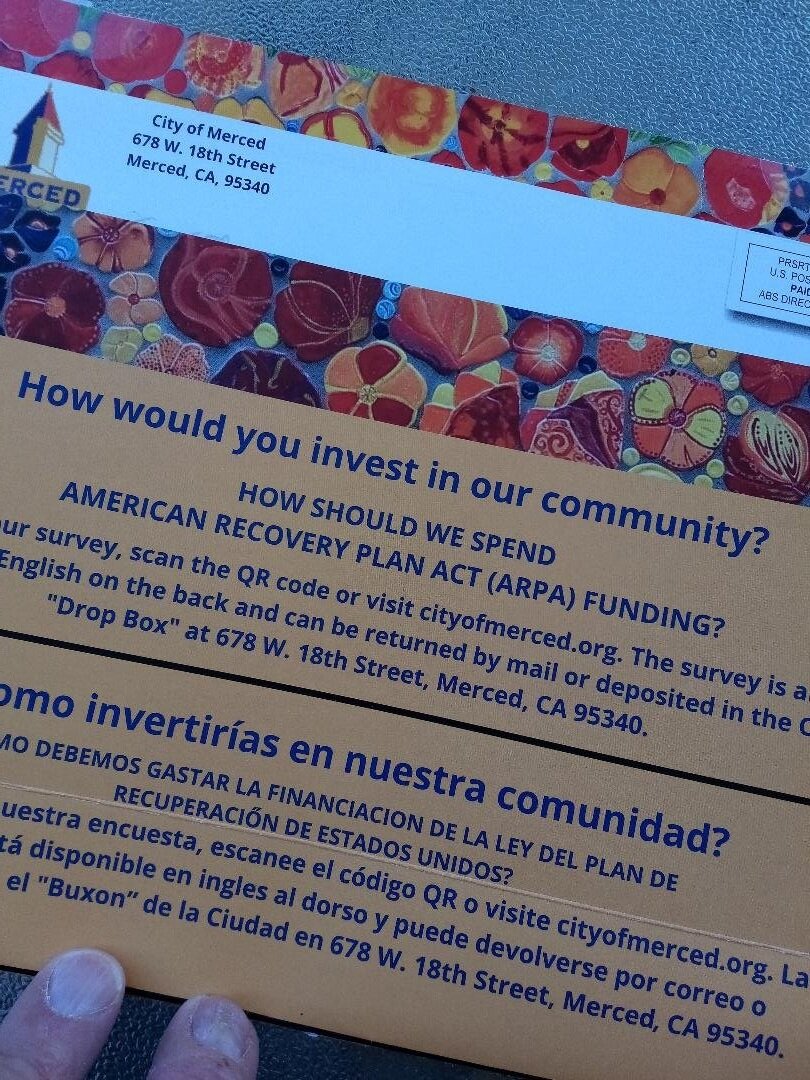
The American Recovery Plan Act survey document mailed to residents in the City of Merced.
The survey sent to homes recently on how to spend federal COVID relief dollars is a fast and easy way to let our City of Merced leaders know what we think.
The survey document includes the CityofMerced.org web address allowing for on-line entry of responses.
The survey features a ranking for priorities in order of preference, a question about the biggest challenge faced during the crisis, and a request for the top three priorities the City should address.
There is room to write in thoughts and points either not covered in the survey, or to expand on particular questions.

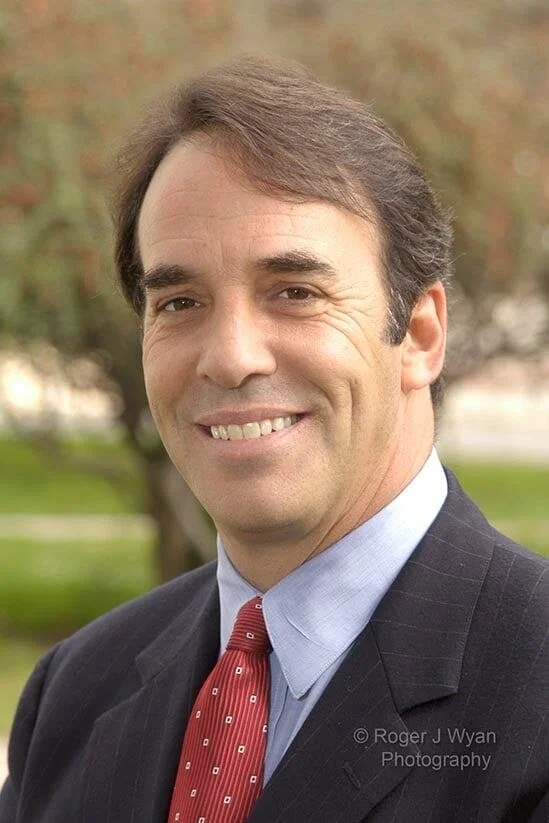
Former Merced County District Attorney Larry Morse passed away on September 14. Photo courtesy Roger J. Wyan Photography, used with permission from the photographer for this specific purpose of this column only.
The community is remembering former Merced County District Attorney Larry Morse who died on September 15.
While I did not know him well, we would often cross paths during the early years of his service as District Attorney and my year as CEO of the Greater Merced Chamber.
After I left that job for my work at a utility company, we’d catch one another at community fund raising dinners. He was often tapped as a Master of Ceremonies for these events; I was usually filling a seat from a table purchased from my former employer.
I recall one time watching him carrying a book and walking briskly up the steps to the Main Branch of the Merced County Library.
He looked at me and said the book was overdue. I asked “where was the investigative reporter when we needed it?”
He gave a quote to the Merced Sun Star at the time his office successfully prosecuted a murder case.
That quote provided the perfect introduction to my murder mystery novel Ten Minutes to Air.
I used that quote at the beginning of my book:
“Murders are almost always about the amount of time someone has to evaluate their actions to stop themselves.”
Larry Morse, Merced County District Attorney.
Larry’s quote was the essence of my fictional story. If a would-be killer could take a few minutes to think about what he or she was about to do, maybe he or she might change their mind. That can apply to a lot of things.

There’s going to be more about the life and career of Larry Morse in social media and our local news outlets.
I will be grateful to him for letting me quote him for the introduction to my third book.
Steve Newvine lives in Merced.

The Night Kenny Rogers Held Them in the Central Valley
Singer’s 2014 Merced Performance Brings Back Memories

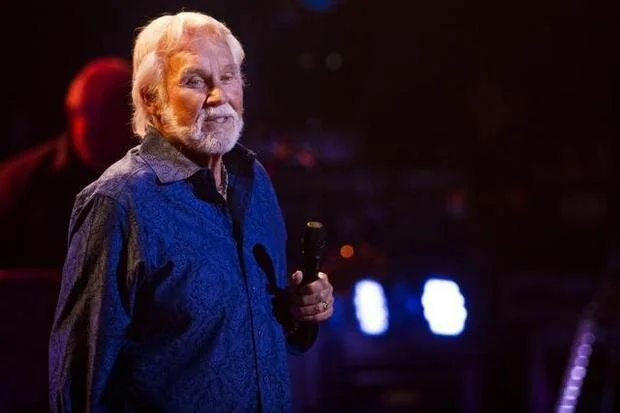
Kenny Rogers belts out one of his classic hits at the Merced Theatre concert from October 2014. Photo: Merced Theatre Foundation
When Kenny Rogers sang the lyrics to his hit song The Gambler, “You’ve got to know when to hold them”, in a Central Valley show back in October of 2014, it was just another packed house for the entertainer. But it was a big deal for the Merced Theatre to host the singer.
It had been about two-and-a-half years since the Theatre completed renovations. A number of lesser known musical acts had taken to the stage during that time. But landing this Grammy and Country Music Association award winning artist was risky.
Would the crowds show up? Would the show be a success? As it would turn out, those fears about whether audiences would respond were erased.
“The Theatre re-opened after renovations in April 2012,” said managing director Heather Holt. “Kenny was our first sold out show.”

The marquee at the Merced Theatre points out that over one-thousand tickets were sold for the October 2014 concert by Kenny Rogers. Photo: Merced Theatre Foundation
Necola Adams remembers the night she met Kenny Rogers following that performance in Merced.
“We shook hands,” she said. “He had the softest hands I’ve ever touched.” Necola, who owns Mrs. Adams Gormet Cookies, had taken six dozen of her cookies to Kenny’s road manager.
The manager asked her to wait until the show was over so that he could introduce her to his boss.
“I heard the whole show from inside Kenny’s tour bus,” she said.

Necola Adams with Kenny Rogers. Photo: Necola Adams
After the show, Nicola was the first person Kenny met as security escorted him from the stage to his bus.
Following an introduction by the road manager, Kenny suggested a photo opportunity.
“I was the only person to get a picture taken with him,” she said.
Kenny Rogers had a career in music that dated back to the late 1950s. In the 1960s, he was the lead singer for the rock group First Edition (later to be called Kenny Rogers and the First Edition).
The group disbanded in the seventies and Kenny pursued a solo career in country music.

Kenny Roger’s October 2014 show at the Merced Theatre was a sell-out. Photo: Merced Theatre Foundation
He had a number of hit records in that decade including the iconic story song The Gambler.
That record sold three-million copies, led to a TV-movie career, and made him an arena-packing performer.
In 1983, he teamed with Dolly Parton for the song Islands in the Stream.
That hit record cemented his place in Country and Pop music. In the nineties and into the 2000s, he continued performing and releasing new music sporadically.
Then in the early twenty-teens he accepted the opportunity to play The Art Kamangar Center at The Merced Theatre

The Merced audience responded enthusiastically to Kenny Roger’s October 2014 show at the Merced Theatre.. Photo: Merced Theatre Foundation
By the time the Merced Theater show, he was just a few months away from announcing the start of a farewell tour.
“He was the first really big name to come to the Theatre since the renovation,” Heather Holt said.
That farewell tour started in 2015 and ended in 2018 with an announcement he would end performing on stage based on advice from his doctors.
A bladder cancer diagnosis led to his decision to end his touring.
He died in hospice care on March 20, 2020.
Nicola was saddened when she learned of Kenny’s passing, but she hangs on to pleasant memories of how nice he treated her right after his Merced show. “You can meet some really nice people if you don’t act crazy around them,” she said. “He was a genuinely nice guy.”
Steve Newvine lives in Merced.
His book Can Do Californians is available at Lulu.com and at BarnesAndNoble.com.
He had planned this column at the time of Kenny’s passing, but COVID closures kept him away from the Merced Theatre.
He thanks Tom Frazier and Susan Walsh for the information that helped this column.

A Friendship and a Stage for Bob Hope-
Comedian’s Legacy Honored in Stockton

The official logo of the Bob Hope Theatre in Stockton, CA. Image: BobHopeTheatre.com
While younger people may have never heard of him, to millions of Americans the name Bob Hope conjures up laughs and lightheartedness.
Earlier generations recall the television specials and the comedian entertaining military troops at Christmastime from years ago.
The Central Valley holds the distinction of being home to a performing arts venue named in honor of the beloved entertainer. Thanks to the generosity of the late Stockton developer Alex Spanos, the Hope name lives on in that city of over a quarter-million people about seventy-five miles north of Merced.
The Bob Hope Theatre opened in the early 2000s in a refurbished Fox Theatre in downtown Stockton.
The building was almost lost to the wrecking ball when Spanos stepped forward with an idea to honor his friend, and a checkbook.

Alex Spanos was good friends with Bob Hope. Here, the pair performed a soft-shoe dance routine for a charity function. Photo: AGSpanos.com
As I first wrote about the Bob Hope Theater.in my book 9 From 99, Experiences in California’s Central Valley, Spanos was primarily known as the owner of the National Football League's San Diego Chargers.
The Chargers are now based in Los Angeles, In the City of Stockton, Alex Spanos was a property developer and community philanthropist.
He passed away in 2018.
The Spanos name graces high school football fields, a college performing arts center, hospital wings, and other places throughout the City of Stockton. In addition, there are scholarship endowments, charity golf tournaments, and art exhibits that have been underwritten by the Spanos family.
The company website has a special section on the Spanos lifetime commitment to charitable giving not only in the Central Valley, but up and down the state of California and into the state of Nevada.
Around the turn of the new century, Alex Spanos was able to mesh his desire to give more to the City of Stockton with a symbol of his then thirty-year friendship with comedian Bob Hope.

Bob Hope was a frequent visitor to the owner’s box at San Diego Chargers games.
He gave a half-million dollar gift to the organization handling the rehabilitation of a former vaudeville theater and asked that the building be named after his friend.
That’s how the Bob Hope Theatre in downtown Stockton got its’ name. Bob Hope and Alex Spanos became friends following a charity golf function in 1969.
"Bob and I teamed up against Bing Crosby and his partner and we beat them,” Spanos said in an interview with television station KCRA in Sacramento well over a decade ago, “From that day onward, Bob and I played golf practically every week.”
The friendship grew over the years with Hope participating in charity events alongside Spanos.
The comedian was an occasional visitor to the owner’s box at Charger games in San Diego. Bob Hope died in 2003 at the age of 100.

A plaque inside the Bob Hope Theatre lists the elected leaders and key players in the reconstruction project. Photo: 9 From 99- Experiences from California’s Central Valley by Steve Newvine.
The theater site started as the T & D Photoplay in 1916, hosting vaudeville and other entertainment acts.
It was renamed the California five years later. The building was torn down at the start of the Great Depression.
The Fox California opened on the site in 1930. During the 1930’s, big stars such as Al Jolson and the Marx Brothers performed there. As vaudeville was replaced by radio as America’s primary source of entertainment, the Fox California relied on moviegoers as a primary source of revenue.
In 1973, the theater closed. The building was placed on the National Register of Historic Places in the late 1970’s. The City and its’ Redevelopment Agency included the theater in a revitalization plan in the early 1990’s.
By the early 2000’s, a combination of the Spanos donation and government funds saved the project and resulted in the renovation that residents and others enjoy today.
While writing 9 From 99, I found a tribute to both Bob Hope’s gift of entertaining audiences and Alex Spanos legacy of charitable giving. On the company website at that time, there was special section on the site where a video of a soft-shoe dance routine with Spanos and Hope was featured.
It is not too often you see a world reknown entertainer alongside one of California’s most generous philantropists take to a stage to wow an audience.
You can find a brief section of the video on YouTube. It is no longer available on the AGSpanos.com site. Alex Spanos carried himself pretty well as a soft-shoe dancer, while Bob Hope showed that he still had the goods in his late eighties at the time of the video (circa 1980).
The comedian likely knew his friend was responsible for the renaming of the theater. Bob Hope passed away a year before the official grand opening. According to the theatre website, the comedian never performed there during his years as a vaudeville entertainer.

The chandelier inside the Bob Hope Theatre in Stockton, California. Photo from 9 From 99, Experiences in California’s Central Valley.
The Bob Hope Theatre was among the first California entertainment venues to reopen after the worst of the COVID pandemic. Audiences that assemble beneath the ornate chandelier inside the historic building may not know that much about the comedian’s legacy.
But thanks to the half-million dollar gift from his friend AG Spanos, and the vision of community members who would not let the wrecking ball take down the building, the Hope name remains part of the history of the Central Valley.
Steve Newvine lives in Merced.
He first wrote about the Bob Hope Theatre in his book 9 From 99, Experiences in California’s Central Valley.

Olympic Memories-
Lapel pins and a beer can offer tributes to the games
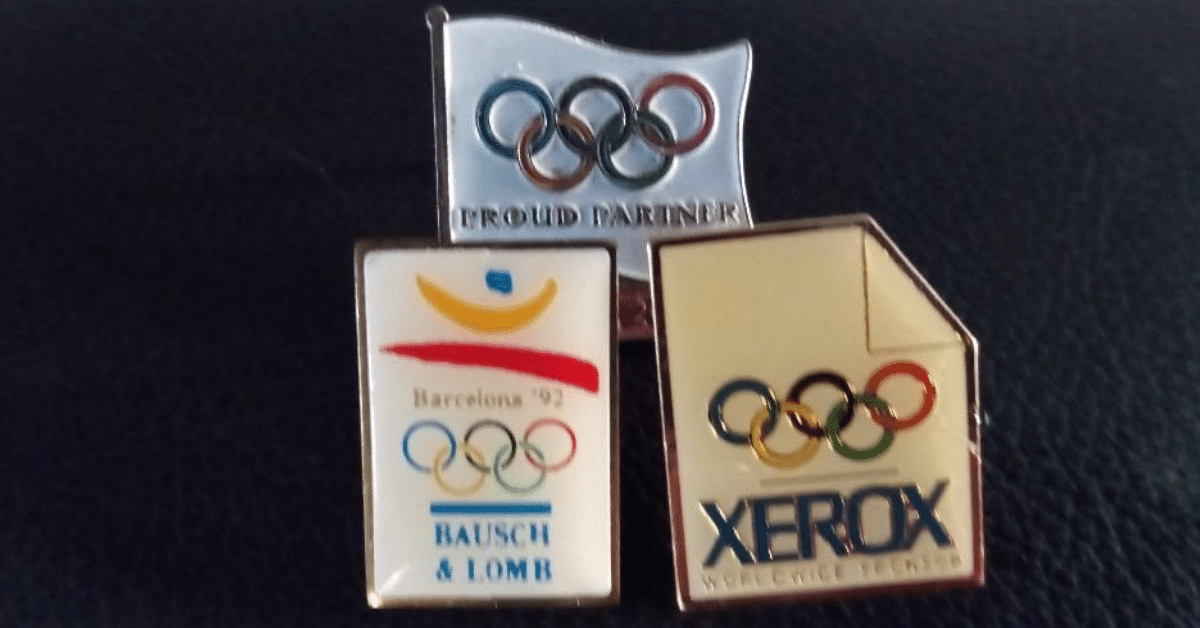
My collection representing over forty years as a working professional include these Olympic themed pins. Photo: Newvine Personal Collection
The Olympics have been dominating our television sets and the social media outlets this summer.
It happens every other year since the summer and winter games moved to an alternating schedule in 1994. For a few months before the games, and during the sixteen days of competition, it seems everyone is talking about the athletes, the new records, the brewing controversies, and the uniforms.
I need not look any further than to my collection of lapel pins collected over four decades of work. Each of the near two hundred pins was worn on my suit lapel at least one time.
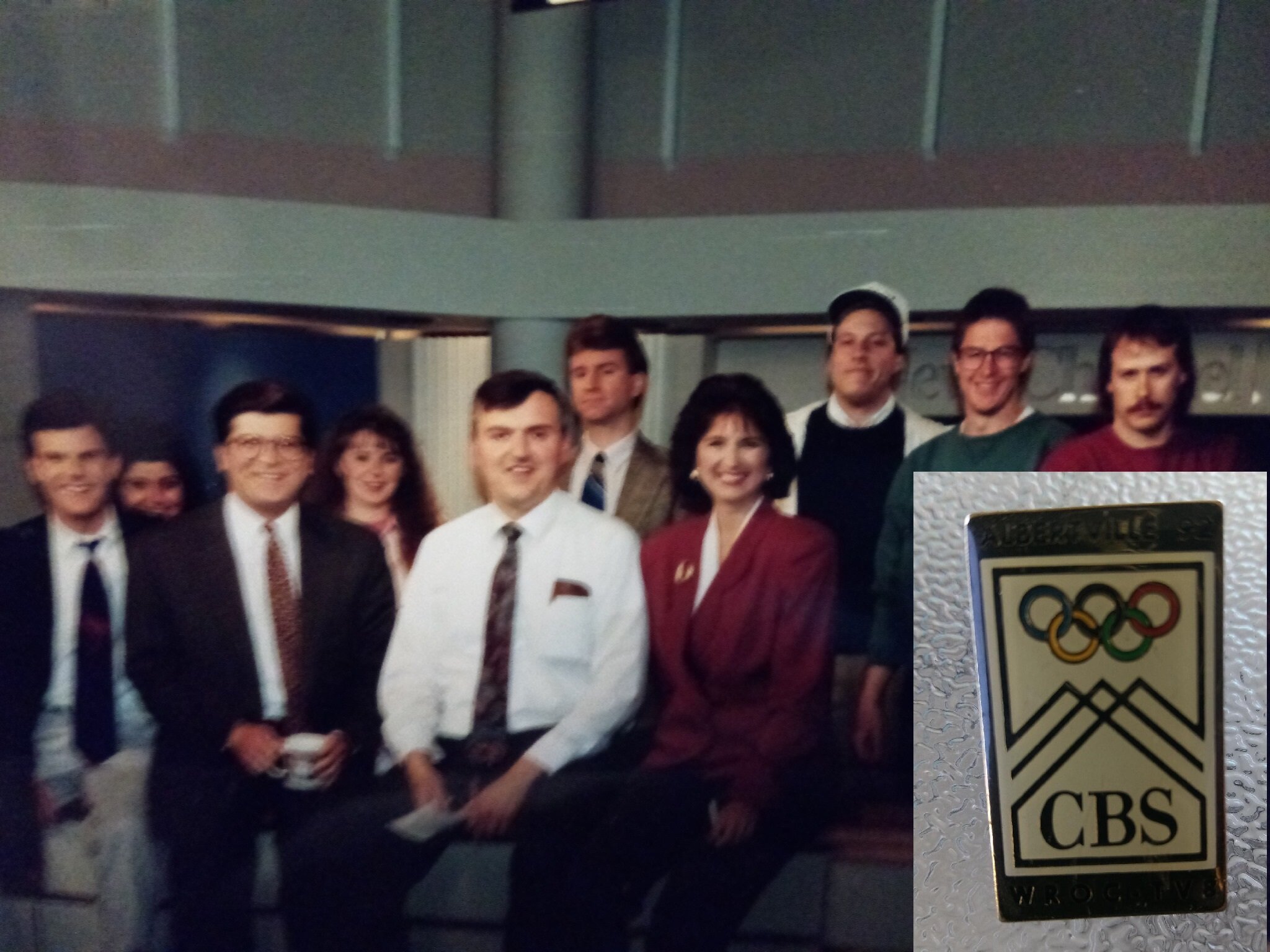
Part of the news team I worked with thirty years ago. I’m the guy in the white shirt, tie, and dark hair. Inset: a special pin made in anticipation of the 1992 Winter Olympics in Albertville, France. Photo: Newvine Personal Collection
One pin stands out from 1992.
I was working for the CBS affiliate at a television station in Rochester, New York.
The station was carrying the winter games. That was the year of Kristi Yamaguchi and the US Women’s Figure Skating team.
My job then was as an executive producer in the station’s news department.
Our general manager determined that if we worked really hard we might be able to maximize the lead-in from those winter games on CBS to move our third place late newscast to second place.
The manager gave us pins that displayed the Olympic rings, the CBS logo and our station call letters. The pins helped keep my focus on the big prize.
We succeeded, and at least for that particular local rating period, our late news made the jump in the ratings.
The years I worked in Rochester were linked to the Olympic games because of three major companies in the area. Kodak, Xerox, and Bausch & Lomb were all official sponsors of the games.
They were really big companies back in the nineties. But success does not last forever. Tech giants such as Apple and Microsoft dominate the Dow Jones Average today.
While most people will remember the US Hockey team’s win over the Soviet team when thinking about the 1980 Winter Olympics, I have a much different memory from the year the games were held in Lake Placid, New York.
1979 was the first year I was working as a television news reporter.
The games would start in early 1980 so Olympic fever was high throughout upstate New York.
I was earning a decent paycheck so I wanted to give extra special Christmas presents for my family. I forget what I got for other relatives, but I do remember getting my sister an Olympic ski cap with images from Lake Placid on it.

The Winter Olympic Snow can, sold as a novelty during the 1980 Lake Placid games. Photo: Newvine Personal Collection.
Also acquired that year was a special beer can.
There was no beer in it, but rather a unique souvenir of the Lake Placid games. Printed on the back of the can of “Lake Placid Snow” was a message from the manufacturer saying that sealed inside the can, there was a small packet of moisture guaranteed to be 1979 Lake Placid snow.
I took their word for it and never opened the can.
The can has been sitting on a shelf in my den or stashed away in a keepsake box wherever I lived for over forty years.

Steve Newvine lives in Merced.
He wrote about his experiences as a television reporter in 1979 and 1980 in his book Stand By Camera One. The book is available at BarnesandNoble.com, Amazon, and at Lulu.com

New Heights, a World Record, and a Milestone-
Updates and an anniversary

Southern California climber Brennen Thompson at Mount Kilimanjaro. Photo: ValleyTough.com
Every now and then, stories require updates
Remember the young man who along with his friend, climbed ten mountains in California to raise money for two hometown charities?
Brennen Thompson did just that with the successful climb up Half Dome at Yosemite in June.
But that’s not all
In early July, Brennan and two others took their climbing gear and community spirit to Mount Kilimanjaro in Tanzania.
The ten California climbs were more than just build-ups to the big climb in Africa.
Each step embraced an effort to make an impact on Brennan’s hometown as well as his adopted new home in southern California.
“By the grace of God himself, we did it,” Brennan said in a video recorded after the Kilimanjaro climb. “I’m forever indebted for the place that makes us who we are.”

Brennen Thompson kept a video diary of each of his climbs, including one at the top of Half Dome in June. Photo: ValleyTough.com
We did two columns on Brennan: one in 2020 at the start of the effort, and one in June when he came to Yosemite.
What’s next for this young man?
Not even he knows.
But if this effort is any indication, we can be assured whatever he attempts will have impact, and make a difference.
You can see Brennan’s video from that Kilimanjaro climb on the website ValleyTough.com

A two-seater all-electric airplane that is part of a four plane fleet being used to demonstrate the feasibility of all-electric aircraft propulsion. The planes are based at Fresno Chandler Executive Airport. Photo: NewVisionAviation.org
We received a lot of attention from the column on the all-electric airplanes now at the Fresno Chandler Executive Airport.
The planes are part of a demonstration project to help develop policy on using all-electric aircraft regularly.
The non-profit New Vision Aviation imagines a future with all-electric planes traveling throughout California.
Smaller municipal airports, such as the one in the City of Merced, might someday be equipped with charging stations.
New Aviation President Joseph Oldham did a test flight in mid-July with the all-electric plane.
He flew round trip from Fresno to Sacramento, with recharging stops in Madera, Merced, Modesto, and Lodi.
As the portable chargers used to regenerate the plane’s power cells were energized by the sun, the flight actually set a record for the longest solar-powered flight in history.
That’s a record that New Vision hopes will be short-lived as more aviators get into the all-electric aircraft space.

The first column I wrote for MercedCountyEvents.com in 2011
That takes us to this brief column from ten years ago about the benefits of volunteerism.
It may not seem like much, and it probably did not make much of an impact when it was first posted in this space in February 2011.
But that column, and the more than two-hundred that have followed since 2011 represent my small contribution to MercedCountyEvents.com.
Webmaster Brad Haven has stayed on top of this effort to provide a forum for non-profits to list their events, for churches to post their hours, for service clubs to share their successes, and for local businesses to get the word out about their offerings.
It’s a tenth anniversary, plus another six months, for the Our Community Story column.
I look forward to many more.
Steve Newvine lives in Merced.
His book Can-Do Californians is available at BarnesAndNoble.com and at Lulu.com


Wings Up on All-Electric Planes-
Local Airports are on board creating capacity for the future

The four Pipistrel Alpha Trainers on display at Fresno Chandler Executive Airport. Photo: New Vision Aviation
Imagine a time when most airplanes will run off power cells that recharge in the same way electric cars do today.
All-electric aircraft are already in use here in the Central Valley of California as part of a demonstration project.
The non-profit group New Vision Aviation facilitated the creation of an eight-county coalition of local governments to apply for a federal grant that has effectively jump-started the concept.
The original idea came to Joseph Oldham, the former Sustainability Manager for the City of Fresno and former Executive Director of a transportation planning non-profit. His accomplishments include nurturing relationships between businesses and the government to get zero-emission buses into public transit fleets.
He reached out to the manager of the Fresno Chandler Executive Airport to brainstorm a plan to buy four experimental electric airplanes from a Slovenia company. The planes are manufactured in Italy.
Joseph did a lot of leg work in preparing the application for a grant to demonstrate advanced transportation technology.
He believes the planes, along with charging stations at airports within range, will do just that.
After presenting the idea to local governments, writing a grant proposal, and pushing the initiative forward, New Vision Aviation was successful.
The idea boils down to creating a network of chargers at local municipal airports such as Merced Municipal Airport and Castle Airport in Atwater.
The experimental aircraft has a two-hour flying range, so the need for a charging network is critical to the success of the program.
“When we asked local governments in the valley with municipal airports to support our grant application, Merced was among the first to sign on,” Joseph said.
The initial grant application was approved.

One of the four Pipistrel Alpha Trainers at the Fresno Chandler Airport getting recharged. Photo: New Vision Aviation.
Four two-seater planes, known as the Pipistrel Alpha Trainer, were purchased and are in use right now.
Joseph has been a pilot for over forty years and has been a passionate advocate for sustainable transportation throughout those years. He says this concept could create the next era of aviation.
“With chargers at these municipal airports, the San Joaquin Valley could support the operation of small all-electric aircraft,” he says.
Alongside the track of creating a network of planes and charging stations to support all-electric aircraft, New Vision Aviation is developing a second track: getting high school and college-aged men and women excited about careers in aviation.
Reduced maintenance and lower electric (as opposed to fossil fuel) costs create an opportunity to bring more diversity into aviation.
The New Vision website envisions a mentorship program where pilots become mentors for young people interested in aviation.

Joseph Oldham is the President of New Vision Aviation. Photo: New Vision Aviation
“We’ve worked with Boeing on identifying the need to increase interest among younger people in flying,” he says. “Especially in lower-income areas and among communities of color.”
All-electric aircraft offers the opportunity to lower the cost of flying when compared to conventional small airplanes.
Some in the industry estimate an hour of flying time now runs a student about $200. This is due primarily to the higher cost of fuel. With an all-electric aircraft, some observers believe that cost could be cut by half or more.
Joseph mentors a young student interested in aviation right now. That student is learning to operate small aircraft.
The student, his flight trainer, and Joseph were featured in a recent episode of the PBS series NOVA. The segment was titled “The All-Electric Airplane Race”.

Joseph Oldham pilots the Pipistrel Alpha Trainer with NOVA correspondent Miles O’Brien in a segment from the “All Electric Airplane Race” broadcast aired earlier this year on PBS. Photo from the NOVA segment.
Joseph intends to fly one of the Pipistrel Alpha Trainers to Sacramento later this summer.
He plans stops along the way from Fresno to the Capitol using existing technology to charge the plane’s fuel cells. That demonstration flight will include a charging stop in Merced County.
“We want to raise awareness of the potential of an all-electric fleet and charging stations throughout California and eventually throughout the nation.”
New Vision is awaiting F.A.A. approval to start a flight school with the planes.
Achieving that goal may be out on the time horizon, but the initiative to bring more young people into the world of aviation will continue to move forward.
It may not be too far into the future when a young Merced County teen can connect with a pilot mentor to help learn more about the discipline and rewards from flying as a career.
The relatively brief history of aviation has two revolutions so far.
The first was powered flight.
The second revolution was jets.
As Joseph told the PBS documentary reporter, “Electric propulsion is the third revolution.”
This entire effort is about making the most of the third revolution and making it more than just an alternative way to fly.
The NOVA documentary featuring New Vision Aviation’s electric airplanes is no longer available for viewing on YouTube, but a program transcript is available at: https://www.pbs.org/wgbh/nova/video/great-electric-airplane-race/
For more information on New Vision Aviation, go to NewVisionAviation.org
Steve Newvine lives in Merced.
His book Can-Do Californians is available at BarnesandNoble.com and at Lulu.com


Yosemite Welcomes and Challenges
-Southern California pair complete a dozen hikes, looking ahead to Kilimanjaro

Brennen Thompson at the bottom looking up Half Dome at Yosemite National Park. Photo: ValleyTough.com
What would you say if you hiked eleven mountains throughout California, and then stared at the bottom of the awe-inspiring Half Dome at Yosemite National Park.
If you were this former upstate New York transplant to California, there is just one sentence:
“It’s going to be long day!”
For the past year, Brennen Thompson and his climbing partner Garrett Wright have been climbing mountains.
Every month, the pair has been making their way through a series of climbs throughout California.
Starting with Sandstone Peak (southern California), they set their sights on a new mountain each month.
Over the course of twelve months, they made it to Mount Wilson, San Gabriel Peak, and Mount Whitney among others.
Half-Dome at Yosemite was number twelve.
They intend to wrap up this year-plus adventure with a climb up Mount Kilimanjaro this summer.

Brennen shortly upon entering Yosemite National Park. Photo: ValleyTough.com
Each climb has been done with purpose.
They raised over seven-thousand dollars to benefit charities in Brennen’s hometown in upstate New York.
But there was more to this effort than raising money for non-profit organizations.
As a new Californian in late 2019, Brennen was committed to making his time in the Golden State impactful. Once the COVID crisis hit, the resolve to succeed became even stronger.
In the Our Community Story column from a year ago when the climbs started, he said, “What better time to give back.”
The Yosemite climb began with a 4:00 AM wake up, a breakfast of pre-cooked oatmeal with fruit, and the trip to the trailhead.
“I was surrounded by massive shadows like El Capitan and, of course, Half Dome,” he said.

Brennen Thompson is originally from Herkimer, New York. He moved to southern California in 2019. Photo: ValleyTough.com
Midway up the cables of Half-Dome, Brennen’s awareness of the gift of life was heightened.
“After encountering trees the size of skyscrapers, waterfalls that couldn’t be imagined, and views that take your breath away, I was a little more thankful to be alive than normal.”
Peanut butter sandwiches, nuts, and granola kept the pair nourished during the adventure.
After five hours, they made it to the top. Brennen took it all in.
“Climbing the sub-dome cables was one of the dumbest things I’ve ever done,” he thought to himself. “Can’t wait to see what they’re like on the way down.”
Thinking initially they would take in a few moments with the solace of nature before heading down, they met another climber who has done the Mount Kilimanjaro climb the pair intends to do this summer.
“We stayed up there longer than normal, probably an hour.” By then, it was time to head back down Half Dome.
It took four hours to make it back to the valley floor using the same route.
“Going down the sub-dome was actually harder than going up!” Brennan explained. “Baby steps, and don’t look to the left or right.”
This was Brennen’s first time in Yosemite. “I was overwhelmed with the beauty and couldn’t have been more pleased with the hike.”

Brennen taking it all in at the top of Half Dome. Photo: ValleyTough.com
As spectacular as Yosemite was, and as ambitious as the total package of twelve hikes has been, the real challenge is coming up soon on the other side of the world.
The pair will head to Mount Kilimanjaro in Tanzania, Africa later this summer.
After that, who knows what is in store for this pair of Californians who promised to make an impact and who are delivering on that promise.
To paraphrase Brennen’s own words, it may indeed be a long and satisfying climb.
Steve Newvine lives in Merced
Brennen Thompson’s story is featured in his book Can Do Californians, available at BarnesandNoble.com and at Lulu.com
You can view summaries of the Valley Tough mountain hikes at YouTube.com and on the ValleyTough.com website


Pedaling Police Escort-
Merced officers lead a community bicycle ride along the Bear Creek paths

Bicyclists are welcomed to the Pedaling with the Police event sponsored by the Merced Police Department. Photo: Steve Newvine
It’s not uncommon on a spring Saturday morning to see groups of bicyclists pedaling the trails along Bear Creek in Merced.
But on this particular Saturday, part of Memorial Day weekend, this group had a special escort.
Officers from the Merced Police Department provided the leadership and protection for participants in the Pedaling with the Police riding event.
The group met at the Merced Open Air Stage in Applegate Park, and then headed along the Bear Creek trail to Parsons Avenue and on to a rest stop at Rahilly Park.

Pedaling with the Police began at the Merced Open Air Stage. Photo: Steve Newvine
About thirty area bicyclists of all ages took part in the free event.
“This is something the Department’s Bike Unit wanted to do to for the community,” said Police Community Affairs Officer Emily Foster.
A pair of older cyclists liked the idea of a police escort along the Bear Creek trail.
“This is good for all of us,” one of the pair said.

The pace was kept with the help of officers from the Department’s Bike Unit. Photo: Steve Newvine
The group headed to the bridge on G Street, and then changed sides of Bear Creek to be in position for the eventual midway point at Rahilly Park.
Once at the park, the bicyclists had traveled three-and-one-third miles. It was time for a break.
“We think it’s important for everyone to know that police officers do a lot more for the community that what is seen in some of the media,” Lieutenant Foster said.
“We’re here now to have a lot of fun with our citizens.”

The group stopped at G Street to change sides from South to North Bear Creek. The switching of sides was made much safer with the Merced Police escort. Photo: Steve Newvine
All that was required for this six-and-a-half mile bike ride was a safe set of wheels, the stamina to complete the ride, and a positive attitude.
“C’mon dad,” one seven year old encouraged his father as the ride was underway.
Whether it was a son with his dad, a daughter with her mom, or a husband-and-wife pair, folks were taking advantage of perfect bicycling weather.
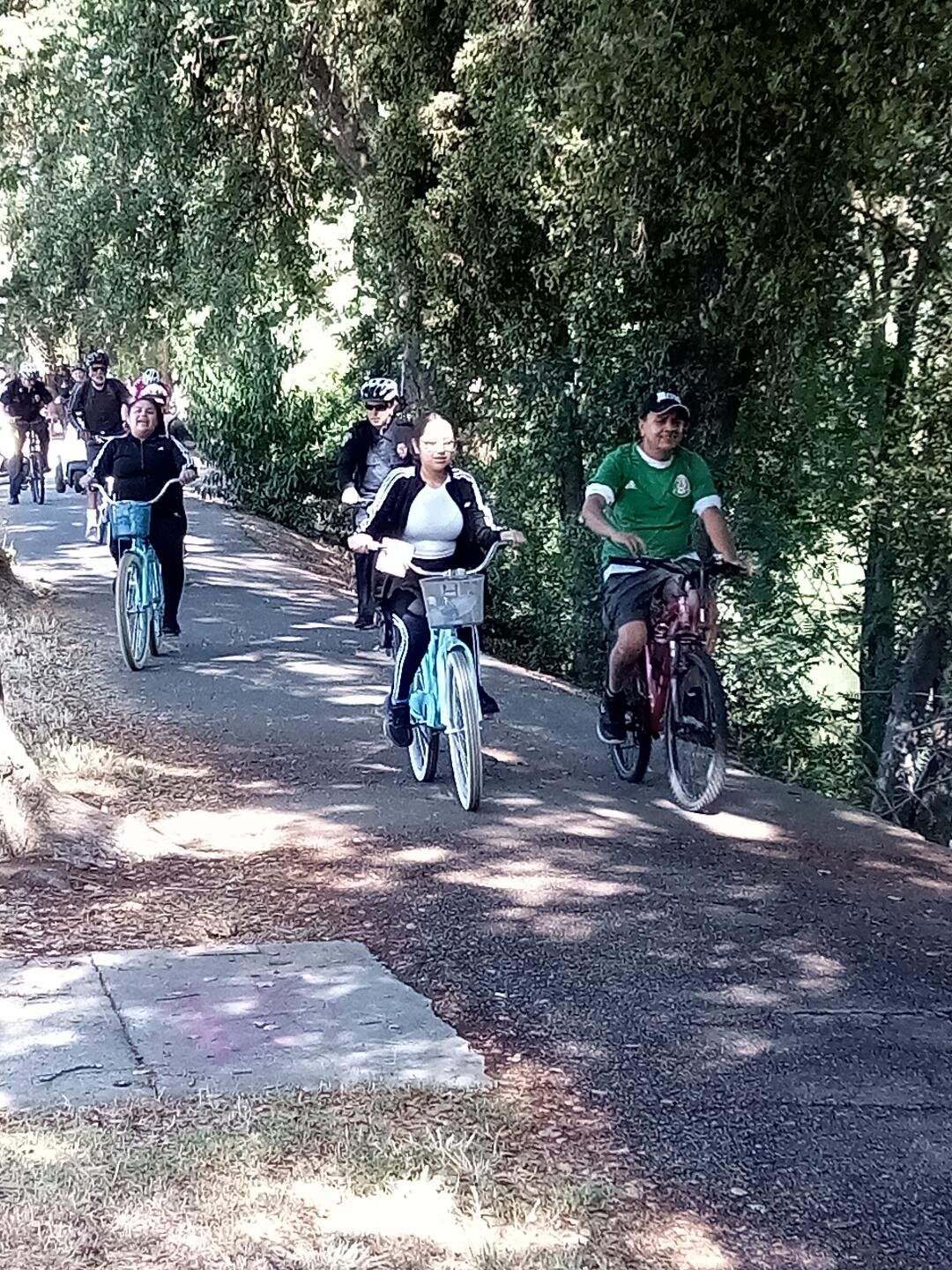
Sunshine and blue skies helped provide the ideal setting for a leisurely bike ride along Bear Creek for the participants in the Pedaling with the Police event. Photo: Steve Newvine
This is the second event the Department has done after enduring the worst of the COVID restrictions.
The first was Star Wars themed activity held on May 4th (may the forth be with you).
“We’re glad with COVID coming to an end, we can host more events like this one,” said Lieutenant Foster.
The returning cyclists had a good workout in the fresh air, a nice outing on a spring day, and hopefully a better understanding about the role police officers play in keeping everyone safe.
Steve Newvine lives in Merced.
His latest book, Can-Do Californians, is now available in a hard-cover version as well as paperback.

Steve Newvinelives in Merced.
His latest book, Can-Do Californians, is now available in a hard-cover version as well as paperback.

Tour Guide, Golfer, and Fisherman
Remembering a beloved family member

The high school yearbook photo of Ed. Photo: The Portal
Memories are churning away in the days following the passing of my cousin-in-law Ed.
Ed was older than my other cousins, so I never saw him as a cousin. He was younger than my uncles, so he was not like an uncle to me. But thinking back on the things we did, the conversations we had, and the laughs we shared, he was clearly my friend.

A shot of the Yankee outfield from the seats during Ed and my visit to the Stadium in the early 1970s. Photo: Newvine Personal Collection
I wrote about Ed in two of my books. In Growing Up, Upstate, I share the story about the time Ed took me to New York City to see the City for the first time, and to see the Yankees take on the California Angels.
In Growing Up, Upstate, I share the story about the time Ed took me to New York City to see the City for the first time, and to see the Yankees take on the California Angels. Ed's cousin suggested we drive into the city.
We drove all over midtown Manhattan well past midnight. When we got back that night we were introduced to the family St. Bernard. When the dog snarled at Ed, he punched it in the nose. The dog never bothered us for the rest of the weekend. As with most of life's adventures, it wasn't about the game.
It was about driving to New York, seeing the city at night, and getting to the stadium the next day. All of it made for a memorable weekend in my life.
In Course Corrections, I devoted a chapter to a family golf tournament Ed organized.
Here’s an excerpt:
In the 1980s, I played golf with Ed many times when visiting my folks in northern New York. Midway through the decade, he conceived an idea for a family-wide golf tournament. ..The Snyder side of the family, my mother’s side, took a lot of pride in our gatherings. Thanksgiving dinner was held at our matriarch Kate’s home then later at my mom’s house.
Easter dinner started with Grandma Kate’s home, then later moved to my aunt Tootie’s place. There was generally at least one outing every summer on Lake Ontario.
With frequent graduations, confirmations, and other special events, there seemed to be a lot of times when the extended family would get together… ..For a few hours on a Saturday, we played, we laughed, and we admired our tee-shirts (specially designed for the event) . ..non players like my Mom and Dad, showed up to provide moral support before heading over to Ed’s house for the post tournament picnic. There, everyone showed up with pot luck dishes in hand.
After our meal, Ed took on the role as master of ceremonies and awarded prizes to the outstanding golfers. It seems as though just about every player picked up some kind of prize. We had a few laughs. The children enjoyed the festivities. Some of us thought: wait until next year.
Ed did not teach me how to fish, but he sure made it a heck of a lot more fun.
I was a teenager when Ed and I were talking about fishing. His grandfather had a pond that had a lot of bullheads ready for the taking. We both had fishing poles so we decided to have a go at it. We must have caught at least a couple of dozen of them.
I say “we” caught them but Ed took them off the lines. Bullheads have a sting and like any fish, they are going to fight as they are taken off a line.
We caught so many fish that Ed made a third fishing pole out of a long tree branch. He tied fishing line to one end, attached a hook to the string and watched as the fish gobbled away.
When we ran out of space in our bucket, we left the pond and headed to my uncle’s house who cleaned the fish. My uncle’s family ate the fish the next day. I did not care about eating the fish; I just enjoyed the adventure of it all.
With his daughter’s help, Ed wrote a book about a memorable family member. He served our military by way of the US Air Force.
His father was killed in action in the closing months of World War II. All of this helped shape him into the man he became. He was a logger most of his working life.
His work was primarily done in upstate New York, but it took him out-of-state including the west for a brief time. Work injuries forced him to give up the job.
He died from heart complications that intensified following his second COVID vaccination. He leaves behind two children, his dear wife, a ton of relatives, and many friends.
I miss him, and regret that COVID concerns likely kept my dad and me from visiting him on my last trip upstate. But I have the memories. And they are good memories.
Steve Newvine lives in Merced.
His books: Growing Up, Upstate and Course Corrections are available at lulu.com

COVID Concerts-
Coping with streaming concerts in the lockdown era

The Merced Symphony Association posted a holiday concert to YouTube in late December. Portions of the concert, including this scene pictured, originated from the First Presbyterian Church of Oakland. Photo: Merced Symphony Association.
My wife and I were not big concert goers.
If we got out to an occasional Playhouse Merced community theater production or even a rare music performance at the Gallo Center in Modesto we consider ourselves lucky.
Like many people before March 2020, we took a lot of things for granted.
COVID 19 changed all that.
The virus altered everything. Face masks, social distancing, hand sanitizer, health department guidelines, vaccine wait lists, and the list goes on.
Add enjoying live music to that list.
I don’t mean the YouTube videos and Facebook concerts we’ve been seeing. They are fine, but nothing will replace being in the concert space as the music happens.

The Grand Ole Opry was the first to engage fans with live streaming concerts at the start of the COVID lockdown. Live weekly concerts have been streamed on Facebook since the start of the lockdown. Photo: Grand Ole Opry
In Nashville, Tennessee, the country music showcase Grand Ole Opry started streaming one-hour weekly concerts as soon as the crisis started in March 2020.
The shows were presented with the blessing of the local health department and that included no in-person audience at first as well as other COVID protocols.
The Opry prides itself on holding consecutive weekly shows since 1925. The Opry had a tradition to keep up. The weekly concerts have been broadcast on radio station WSM every week for ninety-five years.

The group Ellas will be performing live via live stream on January 29 as part of the UC Merced upSTART series.
Besides helping us remain safe by keeping us away from public venues, the move to streaming performances has provided other benefits.
Shows on social media sites allow viewers to comment as the performance takes place; providing instant feedback and a sense of shared experience.
Being able to pause to tend to an interruption is nice. There’s no need to dress up for the show. There’s also no chance of being annoyed by a rude attendee who either talks, texts, or gets up from their seat during the performance.
But I’m willing to accept some of those annoyances in exchange for having live music where I can be part of the audience in person.
It may take a little while longer for those days to return, but we are patient.
Once live in-person performances resume, I promise myself never to take them for granted.

Steve Newvine lives in Merced.
His new book Can Do Californians is available at barnesandnoble.com and at lulu.com

Veterans- Now Never Forgotten
How Merced and other Areas are Honoring those who Served

Mark Bolte, the son of Air Force Colonel Wayne Bolte holds the sign that honors his dad along M Street (Veterans Boulevard) in Merced. Photo: City of Merced
All around the nation, and right here in Merced County, the service and sacrifice of our soldiers who served the nation’s military is being recognized at Veterans Day.
In the City of Merced, a sign honoring Air Force Colonel Wayne Bolte was put up by a City work crew back in the spring of 2020. Colonel Bolte’s son Mark read a biography of his dad at a City Council meeting in May.
Wayne Bolte’s plane crashed in Vietnam in 1972. At the time, he was listed as Missing in Action. A search for remains proved unsuccessful.
Wayne was a Major at the time of the mission. He was promoted to Colonel following the incident. He is memorialized on the Courts of the Missing at the National Memorial Cemetery of the Pacific in Hawaii.
For an unknown reason, Colonel Bolte was not included in the original eighty signs that were placed along M Street (also known as Veterans Boulevard) in the City. He lived in Merced and was stationed at Castle Air Force Base.
At the time the original signs were put up in 2018, the City said more names would be added as City staff, working with local veterans groups, verified other Merced residents who were killed in action.

Field of Honor Caption: Merced’s Field of Honor recognizes service men and women. Photo: Newvine Personal Collection
Once again, the community will honor the men and women who served in our military with a special Veterans Day tradition.
In Merced County, Merced College’s Yosemite Avenue frontage will be the sight of the Field of Honor. Hundreds of American Flags honoring area veterans will be set up.
Merced Sunrise Rotary has been organizing the event for the past few years. Some activities associated with the Field of Honor, such as the Race for the Fallen 5 K run at Merced College, have been called off this year due to the concerns raised over COVID-19.
At least one runner from last year plans to do the 5 K anyway in support of veterans.

My hometown newspaper’s story about the veterans banner project
I’m particularly proud of what the people in my hometown of Port Leyden, New York are doing to honor veterans.
Funds are being solicited right now to purchase banners that will hang on utility poles throughout this village of six-hundred residents.
Those banners will honor dozens of veterans whose families and friends are supporting the effort.

There are two soldiers in my immediate family who served in the military. My uncle Bill Newvine served in the Vietnam War. My uncle Jim Newvine served in the Korean War. Photos: Newvine Personal Collection
In the Newvine family, banners will honor Specialist Four William Newvine. Billy served in Vietnam and returned home in 1967. He died tragically in a car accident in May 1968 within months of leaving the Army.
My other uncle, Jim Newvine served in the Korean War. Jim is the oldest son of my grandparents Art and Vera.

Army photographs of my great uncles Chester Dean (left) and Charles Dean. Both served in World War II. Chet was killed in a training accident in Wales one day before D-Day.
One generation beyond, my great uncles Chester and Charles Dean served in World War II. Charlie fought from Italy and returned home to raise a family. Chester died in a training accident, detailed in a column I wrote in May.
It pleases me that each of these four family members will be honored with banners in the project going on in my hometown.
For our veterans, recognition was never sought. But these displays of honor are no doubt appreciated by those still living.
For those who have passed on, banners and flags help keep memories alive among those left behind.
These are ways for communities to show the sacrifices of their soldiers will never be forgotten.
Steve Newvine lives in Merced.
He wrote Course Corrections in 2019. That book is available on Lulu.com. His new book Can Do Californians will be available in December.
Politics and Sleep Deprivation
*
Memories from 1988
*

The political parties are staging their conventions in August 2020.
2020 and COVID-19
We’ll be hearing a lot about the political conventions taking place in the final two weeks of August 2020.
Most of the coverage will contrast these COVID era conventions to those of years past.
One of the thrills from my fifteen years covering local news on television was the Republican National Convention in 1988.
The station I worked at in Rochester, NY was part of a group of stations that chipped in resources to fund a Washington, DC bureau.
We were able to get interviews from our local legislative delegation on issues of interest in our communities.
An extension of that model was tested in 1988 when the company decided to take the bureau to both Democrat and Republican conventions.
Each station sent extra personnel to provide more coverage for our local audiences. My colleague Rob was assigned to produce coverage for the Democratic Convention.
I was assigned to produce the coverage for the GOP Convention in New Orleans.
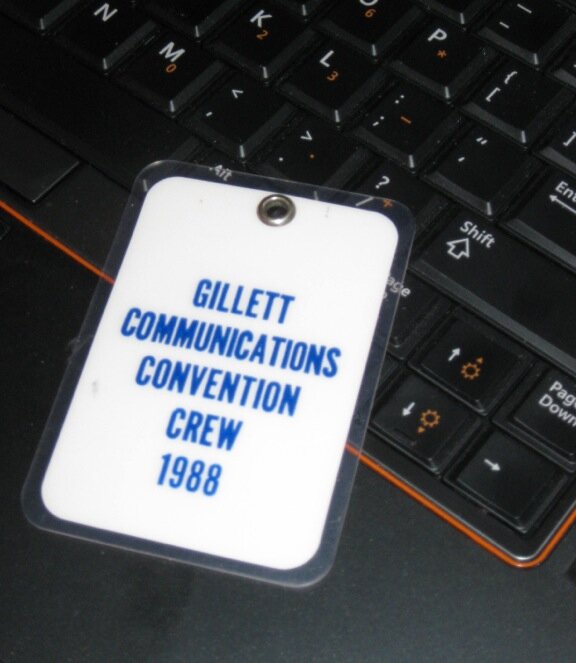
My press credential from the 1988 GOP Convention. Photo: Newvine Personal Collection
Our local team flew into New Orleans on the Saturday before the convention.
We began taping reports on Sunday
It felt like one big story that took almost a week to report. Most of our days began with meetings of the state and local delegations. Those were breakfast events with a guest speaker.
Actor Charlton Heston was the guest speaker one morning. While he did not part the Red Sea as his Moses character did in the movie, he did create some excitement among the party faithful.
Most of our daytime hours were devoted to working in and around the Superdome to interview Republicans from the Rochester area.
I recall the afternoon when Presidential nominee George H. W. Bush announced his choice for his running mate. Once it was clear Dan Quayle was the choice, everyone scrambled for telephone lines.
I recall a good forty-five minutes of busy signals as we tried to call out.
This was long before cell phones became part of the journalist tool kit.

The closest I got to a souvenir from the week I worked the 1988 Republican Convention was this instant photo taken with cardboard cutouts of Ronald Reagan and George Bush. Photo: Newvine Personal Collection
President Ronald Reagan was the keynote speaker on the opening night of the convention.
We were in our workspace at the Superdome, and you could hear the roars from the crowd as the President and Mrs. Reagan were brought into the convention.
Many of us worked our way to the upper level of the arena to get a glimpse of the President.
Two nights later, I was in the room when George Bush made his acceptance speech. That means I was there when the words “Read my lips, no new taxes,” were uttered.
Throughout the week, there were plenty of moments that still take up a little space in my memory. Those moments include sitting in the audience of the Larry King overnight radio program.
We were just looking for a place to sit after a long day covering the events. Larry made reference to us on the air during the program.
My lasting impression was how little sleep I got during the week, and how easy it was for me to fall asleep once I got back home from New Orleans.

It was the busiest week in my career up to that point, and I enjoyed practically every minute.
Steve Newvine lives in Merced.
He worked as a television journalist in the 1980s and 1990s.
You can reach him at SteveNewvine@SBCGlobal.net .
He latest book is Course Corrections, and is available at Lulu.com

A Special July-
A month marking a milestone anniversary

My friend Andy, who taught me the game of chess, was among the first to congratulate my fiancéeVaune. Photo: Newvine Personal Collection.
July will always hold a special place in my memory. This month, my wife and I will celebrate our fortieth wedding anniversary.
The pathway to my wedding day actually started several months prior to July.
Almost from the moment when my wife-to-be answered yes to my marriage proposal, the plans for that special day were underway. We started telling friends and family about the engagement.
Among the first people I spoke to outside of my family was my chess partner and good friend Andy.
Andy was an older man who lived with his daughter near the apartment I rented at the time.
His story about coming into my life and teaching me the game of chess was told in this space about four years ago
For several months, Andy and I played chess weekly at his daughter’s home. We enjoyed a great friendship during the time I got to know him as my career was getting started.
He would always ask me how my girlfriend was. When she became my fiancée, he was very happy for both of us.
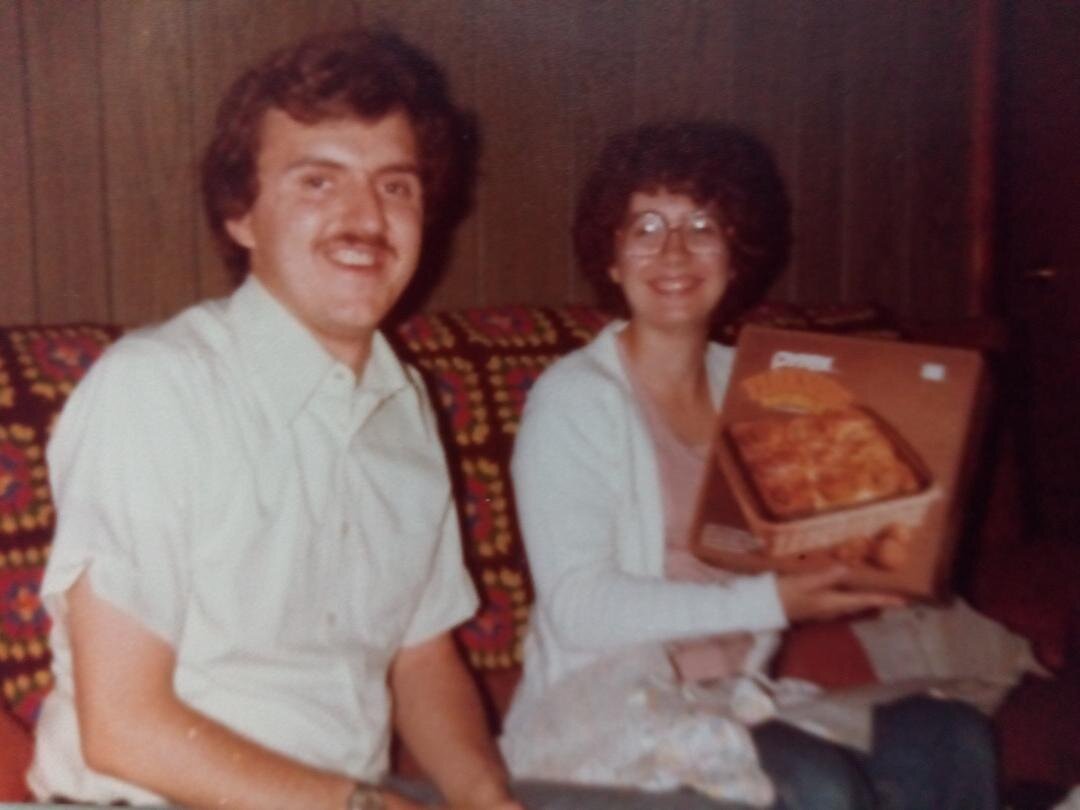
With about one-hundred, fifty miles separating our parents from us, wedding planning was challenging in 1980. Here we are opening a gift from a family member. Photo: Newvine Personal Collection.
As Andy and others were told about our engagement, there was a growing list of things to do in preparation for the big day.
Plans started taking place in Ilion, New York where my bride-to-be had lived right up until she left for year three of her college education.
Details that needed to be worked out included scheduling the ceremony with the local Catholic church, reserving a reception venue, hiring a professional photographer, and a whole array of things that had to be done in preparation for the most important day in our lives.
Complicating matters was being about one-hundred, fifty miles away from my bride-to-be parents’ home.
By July, all of that planning was out of the way.

My niece Tina, brother Terry, and good friend Tim in a grainy photo from the rehearsal dinner the night before I was married. Photo: Newvine Personal Collection.
I can remember the month of July 1980 like it happened forty weeks ago rather than forty years.
I started the month in a new apartment that would become our first home as a married couple. We each gave up our individual apartments and rented an upstairs living space from a nice widow. I lived there for the three weeks leading up to our wedding.
My bride-to-be had moved back with her parents once the lease on her apartment had ended.
The wedding week was amazing. It was described in my 2018 book Stand By, Camera One:
There are a lot of things a married person remembers about his or her wedding day. I remember many details. There was the ceremony, the reception, and the honeymoon that come to mind immediately. But a special memory for me from that weekend was the rehearsal party held the Friday night before the wedding.
My dad used his membership in the Boonville Elks Club to secure the Ilion Elks lodge for the party. The local club catered a buffet held right after the rehearsal at the church. The Ilion lodge was in the same block as the church.
What made it stand out for me was the unifying of two families. Most of the bride’s relatives had never met the relatives from the groom’s side. The dinner, preceded by appetizers at my soon-to-be in-laws house, was a great start to what has now become a four-decade marriage.
The rehearsal party gave me a chance to greet my college buddies who made the trip. Ray was my first roommate from my first semester at Herkimer College.
At the time, he was working in his hometown of Albany. While we spoke on occasion over the previous four or five years, this was the first time I saw him in person since my sophomore year in college.
Tim is a friend I met at Syracuse. He was one of my ushers for the ceremony. Over the wedding weekend, my college friends Matt, Guf, and Rick were welcomed guests.
The rehearsal party got us all in the right mood for what was to come the next day. But for me, it really signified that two families were coming together thanks to the blessing of matrimony.
After Vaune and I said goodnight, I headed to a local motel where my family had booked some rooms for the out-of-town family members.
The motel had a small bar, so after saying goodnight to everyone, my brother Terry and my friend Tim went to the bar to have a “farewell to bachelorhood” bottle of Genesee Beer. When we finished the beer, we all headed back to our rooms to go to sleep.
That was the closest thing I had to a bachelor’s party. But I never felt as though I missed out on anything.
I was surrounded by family and good friends. I was about to get married.

It was a very happy time leading up to the most important day in my life.
All of this happened in July, forty years ago.
I’ll never forget that incredible month.
The month of July will always hold a special place in my memory.
Stand By, Camera One is now available in a hard-cover edition at

A Museum with a Sense of Humor-
My return visit to the Merced County Courthouse Museum

One of the displays at the Merced County Courthouse Museum “Beyond Appearance: Portraits of Merced County Women” exhibit shows two mannequins dressed in period costume, and wearing face masks. Photo: Steve Newvine
There’s a lot we can say about the mid-June reopening of the Merced County Courthouse Museum.
Closed for three months due to the COVID crisis, the doors swung open June seventeenth to pick up where the Merced County Historical Society left off.
By the looks of a display of two mannequins dressed in period costume, with the inclusion of modern-day face masks, it’s clear the Museum and the volunteers have a good sense of humor.
County Historian Sarah Lim was permitted to reopen the Museum as part of the public health structure for ushering business and non-profits back into operation.

The Museum was in the middle of the first exhibit of 2020, “Beyond Appearance: Portraits of Merced County Women” when it closed down due to the COVID outbreak. Photo: Steve Newvine
With most of the restrictions lifted, and new health and safety protocols in place, the Museum is getting back to business in pursuing the mission to preserve local history and educate the community on the past.
The women’s exhibit had just launched in the first quarter of 2020 and never really got a chance to be seen by many in the community. That’s all changed now.

This photograph is among dozens from the Museum archive that are on display in the exhibit “Beyond Appearance: Portraits of Merced County Women” underway until September 20. Photo: Steve Newvine.
The Museum is one of those attractions that could be taken for granted. With limited hours of operation, a reliable core of volunteers, and a presence in an iconic building, it might be easy to just pass by without thinking of the on-going work of the Historical Society.
But when access to this community asset was taken away due to the health restrictions brought on by the coronavirus, many may have lost a connection to this repository of local history.
My wife and I took in a tour shortly after reading about the reopening on MercedCountyEvents.com.
The Merced County Women exhibit is thought provoking.
With sections on agriculture, equal rights, and the role of women as consumers, there is a lot to see and read.

I spoke to the membership of the Merced County Historical Society in February. To give that talk today, I would be governed by the rules of social distancing. Photo: Sarah Lim, Merced County Historian
I was the Museum’s keynote speaker for the annual meeting held in early February.
I remember a nearly filled County Board of Supervisors meeting room followed by a potluck style reception.
It’s amazing how a few months living in the COVID era has changed things.

The courtroom exhibit, part of the permanent collection at the Merced County Courthouse Museum. Photo: Steve Newvine
The permanent exhibit continues to impress me.
On the third floor, the courtroom exhibit remains as a long-standing reminder of the importance of our judicial system. The visitor can take a seat and take in the ambience of a real courtroom.
The school exhibit harkens back to the days of one-room schoolhouses. The visitor is taken back to a time when school was in session.
The old time kitchen and housekeeping exhibit brings back memories, or at least recollections my grandparents shared with me when I was a child.
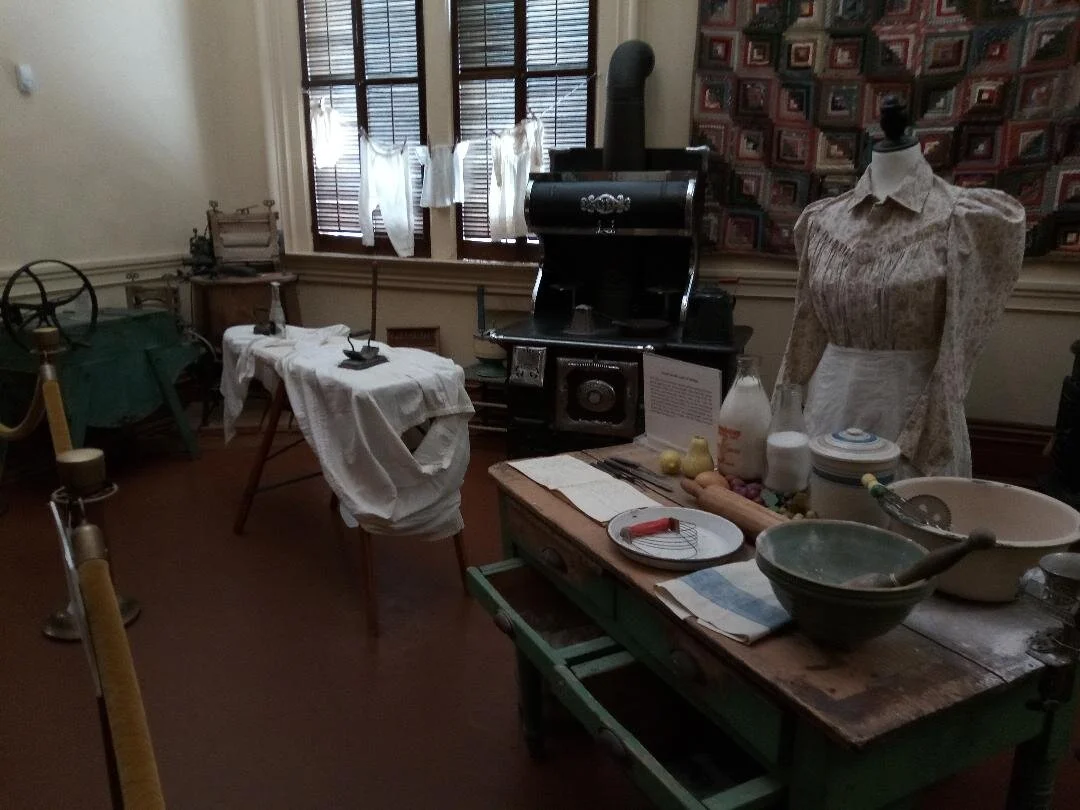
The kitchen display at the Merced County Courthouse Museum. Photo: Steve Newvine
On the main floor, there are many exhibits in the different rooms worth viewing a second time.
My favorite this time around was an old fashioned phone booth in the main hall.
There’s a Superman costume hanging up inside the booth.
Once again, here’s a museum with a sense of humor.

Steve Newvine lives in Merced.
You can reach him at SteveNewvine@sbcglobal.net.
His book Course Corrections is available on Lulu.com
The Merced County Courthouse Museum is open Wednesday through Sunday from 1 pm to 4 pm. COVID restrictions apply. (209) 723-2401, www.mercedmuseum.org
Welcome Back Customers-
Some Stores Try Soft Opening Post COVID

The entryway to the Helen & Louise clothing store at 1804 Canal Street in Merced is decorated in a big way as the shop welcomes visitors back inside following the COVID restrictions. Photo-Steve Newvine
If celebrating is worth doing, often times it’s worth overdoing.
Take for example the big display of balloons that cover the upper façade to the Helen and Louise clothing store in downtown Merced.
“It’s been a great day for us,” said Bree Migliazzo about the return of customer traffic inside the store at the corner of 18th Street and Canal Street.
Since the start of the COVID restrictions in March, Helen & Louise kept their business going with hope that the day would come when customers could come back inside and shop.
When that day finally arrived May 8th, they reopened with a big celebration.
“The outdoor design came from Collective Creations, a local company", Bree said. “ Another local business, Jen’s Cakes, prepared special treats to celebrate the occasion.”

Merced Antique Mall is one of several downtown Merced stores that reopened to indoor customer traffic as part of the relaxing of some of the COVID restrictions impacting retailers. Photo- Steve Newvine
There was optimism among the vendors at the Merced Antique Mall along Main Street as well.
“We’re going to try it, and we hope it pays off,” one of the vendors told me as we were greeted at the entrance.
What the Antique Mall and several other Main Street businesses are trying is part of a broader effort to get commercial activity restarted in the community.
The COVID restrictions closed businesses deemed non-essential by the State Health Department.
In accordance with Governor Newsom’s shelter in place executive order issued in March, Merced’s downtown was effectively closed for business.
“We used the time to deep clean the entire store footprint,” the manager at the Merced Antique Mall told me. “Most of the vendors are offering specials to help get merchandise moving.”

As of May 8, restaurants such as the Bella Luna on Main Street in Merced continue their take-out sales in hopes that they will soon be able to serve customers in their dining area. Photo- Steve Newvine
The sign in front of the Bella Luna restaurant has the same message seen since the start of the COVID restrictions. A customer can come inside to pick up an order.
The dining establishment, along with many other restaurants, is open but only for take-out.
It’s hoped the easing of restrictions on dining rooms will be the next step toward fully restoring area restaurants as comfortable gathering points for customers who work or shop downtown.

Customers wait until Wells Fargo personnel determine there is sufficient social distancing space inside the branch in downtown Merced. Photo- Steve Newvine
Institutions like the Wells Fargo branch on 18th street allowed customers inside with a staff person at the door to make sure social distancing rules were followed.
Banks have been opened throughout the restrictions, but with shoppers and others returning to downtown, the line at the local bank branch appeared to be much longer than in recent days.
A staff person at the bank noted that the longer line may have been more about the traditionally heavier traffic on Friday.
She says the bank is using the same protocols employed at the start of the crisis.
Customers can come inside, but social distancing is the norm with someone stationed at the entrance to allow just the right number of people inside at any time.
“Most of the traffic is done at the teller window,” the staff person told me. “But if a customer needs to meet with a banker, they must make an appointment.”
All around the community, we’re observing the first stages of the return to normalcy in retailing, the restaurant industry, and banking.
It’s been a rough two-month period for local companies.
Many are hoping customers haven’t forgotten them. Bree Migliazzo from Helen & Louise said it best when she described how it feels to have customers coming into the store once again.
“We’re welcoming them with open arms,” she said. “It’s great to have them back.”

Steve Newvine lives in Merced.
His book Course Corrections- My Golf Truth, Fiction, and Philosophy, is available at Lulu.com

Passing Time in the COVID Era-
What I will not take for granted post “shelter-in-place”

A handwritten message at an area golf course offers a blunt take on social distancing. Photo: Steve Newvine
I don’t know about you, but this shelter in place stuff is growing weary.
I’ve had my fill of television ads telling us “we’re in this together”.
Grocery shopping is not just about getting what we need right away, but also about picking up things now that we might need in a few weeks because we can’t be certain of availability.
And, I need a haircut.
I’m taking advantage of the slow return to normalcy in the Central Valley. Some golf courses and public recreation sites are reopening with COVID distancing rules in place.
As I entered a store this week, I saw a sign on the door saying “no entry without a facemask”.
Gas prices continue to fall with some area stations selling regular for under $2 a gallon. But we’re not putting many miles on our cars with almost everything shutdown.
This time of shelter in place has been the right thing to do for public health. As we resume our regular activities in the coming weeks, I’m going to renew many of the activities I’ve taken for granted.
This includes:
- Going to the coffee shop with a friend for an hour of catching up and caffeine
- Returning to brick and mortar church services
- Making a haircut appointment.

A casual round of golf is one of many life experiences I will not take for granted when normalcy is restored in the post COVID era.
Here are some other activities that I will not take for granted once COVID is over:
Newspapers
I’m fortunate to have home delivery for a daily paper, mail delivery for another paper, and easy access to the weekly paper. It’s great to go to the driveway or go to the mailbox and pick up the news. While on-line access to local news is fine, the presence of a real paper newspaper is my preferred method of getting the news.
Golf and outdoor recreation
I’m glad some area courses are back in business. But it will all seem real when we can go to any of our local parks and see them full of activity.

Here’s a stack of books the folks living at my house have read over the past several weeks. Photo: Steve Newvine
Reading books
My pack-rat storing of books from the Friends of the Library shop, garage sales, and thrift stores created a good foundation for reading during shelter in place. We’re looking forward to the reopening of these sources of books, as well as the reopening of our local book stores.
I’m anxious for thrift store donation centers to reopen so we can give away our gently used books for resale.
Dental and optometrist appointments
These professionals had to end routine services during the crisis. We miss them, and remain mindful of how important they are to our overall health.
Phone calls, including video calls. Both incoming and outgoing checks from family and friends are appreciated all the way around. The practice should not have to stop when this is over.
Email and social media
When I say social media, I mean the good kind: pictures of family, friends, vacations, and even the exotic entrees some of our friends might order at restaurants.
Unfortunately, the angry political social media will continue.
Listening to music
My collection of compact discs continues to provide hours of entertainment, centeredness, and pleasure. There’s no danger that will stop, but I will always be grateful for the gift of music. Shopping in stores here in Merced County.
I miss my runs to the Mall, shopping plazas, and Main Street in Merced. I especially miss the Merced Antique Mall where I could always find something I didn’t realize I needed.
The cultural events that add some zing to our lives. I want to see the marquee at the Merced Theatre tell us about the next show coming to town.

I want to be in the audience for a performance from Playhouse Merced.
I want to have the dilemma of having to choose between a concert at Merced College and an event at UC Merced that might be taking place at the same time.
We want our regular lives back.
Here’s hoping we return to the new normal in Merced County real soon.

Signs of the COVID Times

The marquee sign at Merced Mall reminds people that Big Lots and Target are open. Photo: Steve Newvine
How Merced is coping in the corona virus era
The marquee sign in front of Merced Mall has become a barometer of our community’s response to COVID.
Immediately after Governor Newsom imposed quarantine at home restrictions on March 19, the sign informed passersby that the Mall was closed.
It is a sign of the changing times in Merced.
A clerk at a neighboring store told me how he felt when he drove past the Mall with all the empty parking spaces.
“It’s eerie,” he said without breaking his smile. “I never thought I’d see a time like this.”
In the days since the restrictions were announced, the sign was changed to reflect that the nearby Target and Big Lot stores were open.
In the foreground heading East on Olive, the sign promoting the Mall expansion project remains.

Barriers have been placed at the parking lot entrances at St. Patrick’s Church in Merced. Photo: Steve Newvine
We’re now in the COVID era where church parking lots are empty, and lines form a half hour before some grocery stores open.
The churchgoers turn to televised services on line or on their televisions.
The shoppers are hoping to find TP, paper towels, hand sanitizer, and a myriad of food products that seem to disappear overnight.
Some call it the COVID era. Others call it the hoarding era.
A grocery store clerk lamented, “In the store I asked a man I know who is single why he needed two large packages of toilet paper. He just looked at me and said ‘Why should you care?”

Empty paper product shelves symbolize the state of flux in area retailing. Photo: Steve Newvine
On a lighter note, I recognized an acquaintance waiting in line at a store that opened early one weekday morning just for seniors.
He told me, “I feel as though I’m at my fiftieth high school reunion with all these familiar faces.”
We know this crisis will change the face of commerce in many ways. Restaurants are converting to take-out and delivery transactions as dining rooms are shut down.

The iconic Branding Iron sign waits for the day the popular steak house reopens. Photo: Steve Newvine
On Sixteenth Street, a familiar neon sign has gone dark. Merced’s Branding Iron sent a message on Facebook in late March saying they were shutting down until further notice.
The management thanked customers for their support in the post adding, “Alright, so we kept going as long as we could but the time has come now when we HAVE to shut down completely until further notice.”

While the primary shopping area is closed to shoppers, construction crews continue their work on the Merced Mall expansion. Photo: Steve Newvine

The signs we see, whether in front of the Mall, or taped to an empty store shelf, each share a part of the COVID story’s impact on our city. Some may offer a ray of hope for the future.
Construction continues on the Mall’s expansion project. The project remains on schedule.
We’ll know things are getting better when the marquee changes one more time at the Mall, and when the neon is blazing again at the Branding Iron.
Steve Newvine lives in Merced.
He has written Course Corrections, My Golf Truth, Fiction, and Philosophy. The book is available at Lulu.com

Paying Respects to Porterville
Departments statewide, including Merced, sent firefighters to help out

The city block in Porterville where the Public Library once stood. Photo by Steve Newvine
The Porterville Library fire is a story that impacts many of us on several levels.
There’s the tragedy of two firefighters losing their lives battling the blaze, the arrest of two teens who now face charges of arson and manslaughter, as well as the loss of a community resource that served hundreds of families in the City along with many others from around this City of sixty-thousand residents.
Words come up short in trying to describe the feelings of citizens who lost two of their own.
At the heart of the story is the outpouring of help and the paying of respects to a community dealing with their loss.

This sign in front of the Porterville Elks Club announces the postponement of activities out of respect for the first responders. Photo by Steve Newvine
Upon entering the section of the downtown area where the library once stood, I spotted a sign in front of the local Elks club announcing the postponement of some events “with respect to our first responders”.
Respect seems to be the best word to describe what I saw upon my visit just a few days after the tragedy.
The fire broke out around five o’clock Tuesday evening, February 18.
Porterville Fire responded within minutes. A second alarm, signifying that more firefighting resources would be needed, was pulled within minutes of the first crew responding.
Captain Ray Figueroa and Firefighter Patrick Jones died fighting that fire.
There are beautiful descriptions of these two heroes on the Porterville Fire Department’s Facebook page.

The community of Porterville, and others, paying respect with this display in front of the Fire Department. Captain Ray Figueroa (left) and Firefighter Patrick Jones lost their lives fighting that fire. Photos from the Porterville Fire Department Facebook page. Photo illustration by Steve Newvine.
Departments from all over the area helped out to put the fire down, and in the days following there were departments sending in resources as far away as Los Angeles.
In Merced, Deputy Fire Chief Casey Wilson told me the department sent two firefighters to Porterville the next day to help relieve others.

Public safety barriers encircled the block where the remains of the Porterville Public Library once stood. Photo by Steve Newvine
As I entered the scene, there was a public safety yellow tape serving as a barrier. I asked a police officer nearby if I could go beyond the barrier to pay my respects. He told me they were not letting anyone other than employees who worked in that area beyond the barrier so that crews could work on removing the debris.
I thanked the officer, and told him I understood that decision. This tragedy has been hard on the police department as well.
It’s been hard on all first responders.

Flags fly at half-staff out of respect for the two firefighters killed battling the February 18th fire. These flags are in front of the Porterville Police Department and the Elks Club. Photo by Steve Newvine
Porterville is about one-hundred, thirty miles south of Merced. That seems like a long way, but this tragedy is shared across California.
On the streets of Porterville, I spoke with a firefighter from outside the region as he was heading to his department vehicle.
He told me he wasn’t familiar with the area, but he was here to assist where needed.
He, like many others, were showing respect to firefighters Figueroa and Jones by doing whatever he could to help out.
That’s what good neighbors do.
Steve Newvine lives in Merced

Veterans Memorial Signs Pay Tribute to Merced’s Heroes
Signs Along Veterans Boulevard Call Out 80 Military Killed in Action

Signs Along Veterans Boulevard Call Out 80 Military Killed in Action. Photo by Steve Newvine.
Chances are family members of US Army Private Cornelius W. Tuyn are no longer in our community.
The same can be likely said for US Army Mechanic John R. Veary.
Both lived in Merced. Both lost their lives in World War I.
Thanks to the City of Merced, both are being remembered.
Chronologically, they are the first veterans to be honored in the City of Merced’s Memorial Plaque initiative.
*By Veterans Day on November 11, eighty signs will be lining a broad section of M Street in the City of Merced.

One of eighty memorial signs honoring veterans who lost their lives in US military service. Each sign names a service member from the City of Merced who was killed in action. Photo- Steve Newvine.
Among the men whose names appear on the signs is US Navy Corporal Robert M. Crowell who lost his life in World War II.
He was born in the same month that Private Tuyn was killed during World War I: October 1918. Crowell who served in the US Navy, died on July 2, 1944.
The signs are memorials to members of the armed services killed in action who were from the City of Merced. The memorials cover service members from World War I on up to the war in Afghanistan.
The signs have white lettering over a blue background. Individually, they recognize a soldier, his rank, branch of service, and years served.
Collectively, they make a very strong statement as to how our community shows respect to those who gave their lives defending our country.
“They are all from the City of Merced and all members who died in combat zones,” says Mike Conway, the City of Merced Information Officer.

These white on blue signs are on utility poles up and down M Street. Each one recognizes the service of a soldier from the City of Merced. Photo: Steve Newvine
Army Private Tuyn and Mechanic Veary are the only two Merced residents known to be killed in action during World War I.
Thirty-seven of the eighty soldiers memorialized on the signs served in World War II. The signs include the names of thirteen soldiers killed in the Korean War, twenty-one from the Vietnam War, and four from Operation Iraqi Freedom through the war in Afghanistan.
Among the Korean veterans is US Air Force Captain Ralph A. Ellis, Junior. Captain Ellis died on July 21, 1950.
The memorial to fallen veterans was a natural next step in the City of Merced’s journey to pay tribute for the contributions of all who have served in the military.
In recent years, Merced City Council renamed the bridge on M Street spanning Bear Creek to Veterans Memorial Bridge.
A section of M Street near the bridge now carries the name Veterans Boulevard.
In the most recent stage of renovation for the bridge, five flag poles were installed representing each of the five branches of the Armed Forces.
Flags from those branches of the military will now be flown on the bridge during special occasions and at other times to honor veterans.
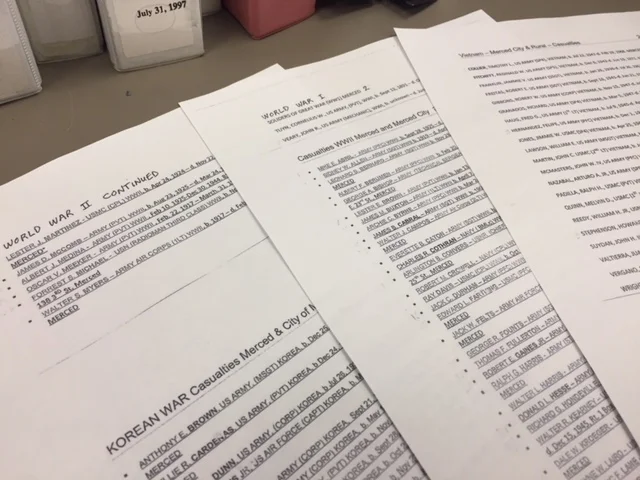
Part of the list naming the eighty soldiers from Merced who were killed in action in our nation’s wars. Photo: Steve Newvine
The City’s Department of Public Works has been posting the new signs along M Street.
Of the twenty-one soldiers listed among the veterans who died in action in Vietnam, five were Marines.
That list includes Lance Corporal Juan B. Valtierra who was killed on January 5, 1966.
It’s an ambitious undertaking, and it will be an ongoing task to find, verify, and post memorials to other City of Merced veterans who may not be on the current list.
“We don’t believe it is a complete list,”Mike Conway says.“We are seeking the public’s help in making it complete.”
The city staff has started this project with the names of 80 military personnel from the City who have died while serving during combat.
One complication is limited records on World War I Veterans.
That is why Assistant City Manager Stephanie Dietz says her team needs help from the community.
“If your loved one was a City resident who died in battle and is not on this list, please let us know.”
The current list of the eighty City residents being memorialized is posted at www.cityofmerced.org/veterans.
The most recent death memorialized on the signs is US Army Private First Class Luca C. Hopper. Private Hopper died on October 30, 2009.
More names will be added as City staff, working with local veterans groups, verifies other City of Merced residents who were killed in action.
More names may be added if there are more deaths of City residents serving in the current war in Afghanistan. The names I chose to use in the column represent four branches of the armed services: Army, Air Force, Navy, and Marines.
I selected one from each war America has fought since World War I, and I included two for World War I as there were only two in that category. Hopefully, when we see these signs we remember not only the soldier whose name appears, but all the men and women throughout the country who made the sacrifice.
Soldiers like Army Private Tuyn and Mechanic John R. Veary are remembered today, more than one-hundred years after they were killed in action thanks to this effort by the City of Merced.

We are grateful to these brave men for their service and proud of the sacrifice from all our veterans.**
Steve Newvine lives in Merced
He remembers his Uncle Bill Newvine who served in Vietnam in the book Finding Bill, available at Lulu.com
To explore Steve Newvine's complete collection of books, simply click on the link below.
CLICK HERE
Steve is also open to delivering speeches for service club programs and other public speaking engagements.
Contact him at: SteveNewvine@sbcglobal.net